
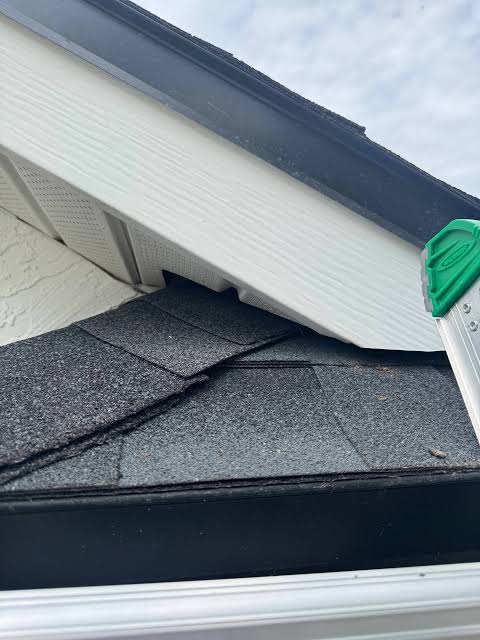
Wildfire Home Hardening for East Bay Homes
Assess, harden and document vulnerable openings where wind-driven embers may enter. Practical improvements through trusted local service partners.
Find ember-entry points around your East Bay home.
- Review vents, eaves, garages, decks and Zone 0
- Ask about Vulcan Vent installation options
- Prioritized recommendations, no obligation
- Trusted local service partners
What to Expect
A clear path from assessment to practical next steps for East Bay homes.
- 01
Exterior assessment
We review vents, eaves, garages, decks, gaps and the first five feet around the home for common ember-entry vulnerabilities.
- 02
On-site walk-around
Observed concerns are documented with photographs when helpful so you can see what we found.
- 03
Prioritized recommendations
You get a clear plan matched to your openings, construction and budget. Not one-size-fits-all.
- 04
Partner-completed hardening
Approved work is completed through trusted local service partners using materials suited to each opening.
- 05
Documentation when available
Photos, work summaries and material information can help you keep a record of completed improvements.
Some openings that allow rodents in can also allow wind-driven embers. Materials for each purpose are not automatically interchangeable. Ember-resistant improvements must account for material type, opening size, corrosion resistance, heat exposure and proper building ventilation.
Two Layers of Wildfire Resistance
Home hardening and defensible space do different jobs. A complete strategy considers both.
Home Hardening
The structure itself: vents, roofs, eaves, windows, garages, decks, and exterior openings where embers can get in or catch nearby materials.
It does not make a home fireproof. It reduces known vulnerabilities.
Defensible Space & Zone 0
The yard around the home: vegetation, debris, and combustibles, especially in the first five feet beside walls, decks, and stairs.
Zone 0 is that critical strip right next to the house.
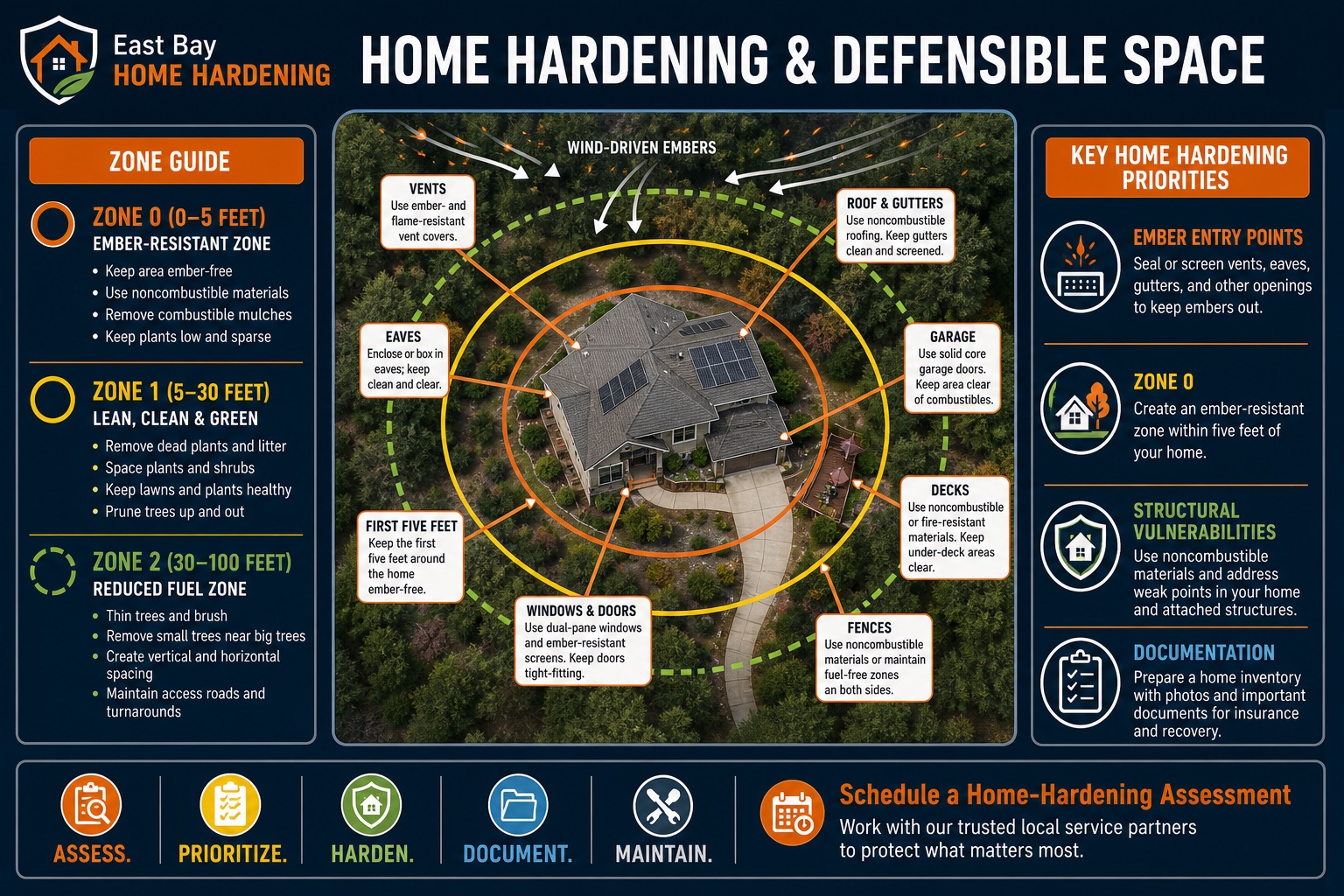
CAL FIRE publishes defensible-space and home-hardening resources many East Bay homeowners use when planning property improvements. Local rules can differ, so confirm requirements with your city, fire or building authority. This is a private assessment, not an official CAL FIRE or fire-department inspection.
Home-Hardening Services
Home-Hardening Assessment
A structured exterior review of common ember-entry and ignition vulnerabilities. Assessment options may include photographs and prioritized next steps.
Request AssessmentVulcan Vent Installation and Retrofit
Evaluate attic, eave, soffit, gable, foundation and crawlspace vents. Options may include retrofit kits or complete replacement vents when available.
About Vulcan VentsExterior Gap and Ember Sealing
Address appropriate gaps around penetrations, siding, rooflines, trim, garage openings and vent frames with materials selected for the application.
Ask About SealingGarage, Eave and Zone 0 Improvements
Review garage-door gaps, open eaves, under-deck areas, fencing connections and combustible materials within the first five feet of the structure.
Request ReviewOur Home-Hardening Process
From assessment to documented improvements, so you know what to do next.
- 01
Home-Hardening Assessment
We start with an exterior walk-around of your East Bay home focused on the openings and materials where wind-driven embers commonly collect or enter. The goal is a clear picture of what is vulnerable today, not a one-size recommendation.
- Attic, gable, soffit, eave, foundation and crawlspace vents
- Garage-door gaps, garage vents and weather seals
- Roofline edges, gutters, eaves and roof-to-wall intersections
- Exterior penetrations, siding gaps and damaged screening
- Decks, under-deck areas, fencing connections and the first five feet
- Photographs of observed concerns when helpful
- 02
Custom Prioritized Plan
Based on what we find, we organize recommendations by urgency, complexity and budget. Some homes need vent retrofits first. Others need garage seals, eave work or Zone 0 cleanup before larger upgrades. Your plan matches the house in front of us.
- Prioritized list of observed ember-entry and ignition concerns
- Practical next steps matched to openings and construction type
- Discussion of Vulcan Vent retrofit vs replacement options where relevant
- Clear separation between home-hardening work and defensible-space tasks
- No obligation to move forward with every recommendation at once
- 03
Ember-Resistant Improvements
Approved work is completed through trusted local service partners using materials selected for ember resistance, corrosion resistance, heat exposure and proper ventilation. Ordinary rodent mesh is not automatically suitable for wildfire home hardening.
- Vulcan Vent installation and retrofit options when appropriate
- Fine corrosion-resistant metal mesh or listed vent assemblies as needed
- Sealing gaps around vent frames, penetrations, trim and garage openings
- Eave, soffit, garage and under-deck improvements where approved
- Zone 0 related exterior items such as fencing connections when applicable
- 04
Documentation for Your Records
When work is complete, available documentation helps you keep a record of what was done and which materials were used. That record can be useful for your own maintenance planning and for conversations with insurers or local authorities, who make their own decisions.
- Photographs of completed improvements when available
- Work summary describing the areas addressed
- Material information for installed vents or sealing products when available
- Notes on remaining items you may want to schedule later
- 05
Ongoing Maintenance Checks
Home hardening is not a one-time event. Screens tear, seals shrink, gutters fill with debris and Zone 0 materials can creep back toward the walls. Periodic checks help catch deterioration before it becomes another pathway for embers or pests.
- Inspect vents and screens for damage or oversized openings
- Check garage seals, exterior gaps and roof-edge conditions
- Clear gutters, roof valleys and under-deck debris
- Keep combustible materials away from the first five feet around the home
- Revisit after storms, remodel work or seasonal vegetation growth
Ready to Walk Your Own Property?
Use our East Bay home-hardening checklist to review common ember-entry areas before or after an assessment.
View the Complete Checklist- Roof and gutters
- Vents
- Eaves and soffits
- Garage
- Decks and porches
- First five feet
Serving East Bay Hillside Communities
Wildfire home-hardening assessments and related services are available throughout Oakland Hills, Berkeley Hills, Orinda, Moraga, Lafayette, Walnut Creek and surrounding East Bay communities.
See all service areasRelated rodent-exclusion services
Many of the same openings matter for both ember entry and rodent exclusion.
Vulcan Vent Installation and Retrofit Options
East Bay Rodent Proofing offers Vulcan Vent installation and retrofit options through trusted local service partners. Vulcan Vents combine a stainless-steel ember screen with a heat-reactive intumescent honeycomb matrix to help block wind-driven embers and close against extreme heat.
Vulcan Vents offers ember-resistant vent products designed for use in wildfire-prone areas. Product listings, approved applications and installation requirements vary by model and opening. The appropriate product should be selected based on the specific vent location, existing construction and current local requirements.
- Eave and soffit vents
- Gable vents
- Foundation and crawlspace vents
- Dormer and continuous vents
- Retrofit kits for existing vents
- Complete replacement vents
- Standard and custom sizes when available
Vent upgrades must maintain appropriate airflow and moisture control. Product selection should account for the size and purpose of the opening, net-free ventilation requirements, surrounding materials and applicable building requirements.
Trusted local service partners install Vulcan Vents and other appropriate ember-resistant improvements for East Bay homes.
Wildfire Home Hardening FAQs
Straightforward answers about home hardening and ember-entry protection for East Bay homes.
Find the Vulnerable Openings Around Your Home
Request a home-hardening assessment to review vents, gaps, eaves, garages, decks, fencing and other areas where embers may reach the structure.
Call or text (925) 319-6934Wildfire home-hardening services, including Vulcan Vent installation, are provided by trusted local service partners serving the East Bay.
Ready for a Home-Hardening Assessment?
Request a free assessment to review vents, eaves, garages, decks and the first five feet around your East Bay home.